
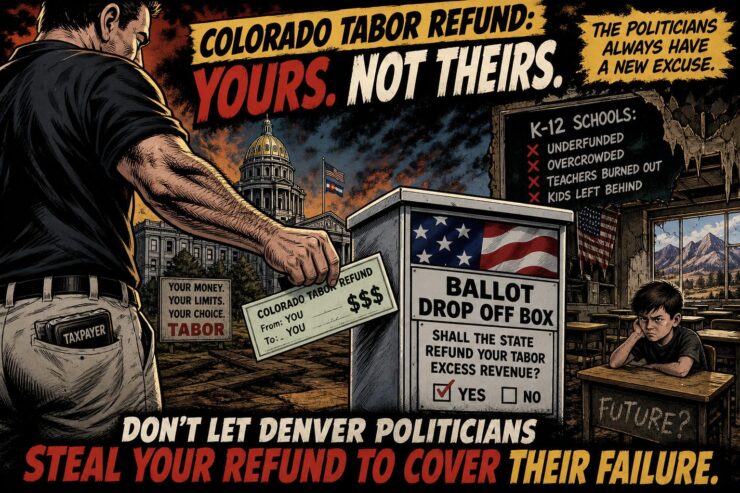
The Gazette reports that a Democratic-backed proposal is headed to the ballot asking Coloradans to give up TABOR refund money for K-12 schools. Translation from Capitol Goblin to English: the state wants voters to hand over future checks, and it is wrapping the ask in the political bubble wrap of “for the children.”
And not couch-cushion money, either. According to the article, a nonpartisan analysis says the average Coloradan would forfeit more than $7,000 in TABOR refunds over the next decade if voters approve it. Seven grand. That is not a bumper sticker. That is a transmission, a medical bill, a year of groceries getting mugged by inflation, or the property tax bill that already looks like it was written by a ransom note enthusiast.
Here is TABOR in plain English: when Colorado government collects more tax revenue than it is allowed to keep under the Taxpayer’s Bill of Rights, the excess is supposed to go back to taxpayers. It is not a gift from the state. It is not a bonus. It is your money making a rare escape from the marble wallet-vacuum in Denver.
This ballot measure would ask voters to let the state keep that money and direct it toward K-12 education. Schools are the stated purpose, and yes, education funding is a real issue people care about. Nobody serious is sitting around rooting for broken classrooms and underpaid teachers like some cartoon villain with a monocle.
But “schools” is not a magic word that ends the discussion. It is the beginning of the cross-examination.
Who pays? Taxpayers do. Who controls the money? The same political class and education bureaucracy that always shows up with an empty bucket and a violin. What outcomes are guaranteed? That is the part voters had better read with a flashlight and a bad attitude.
Because when politicians want your refund, they rarely call it taking your refund. They call it an investment. They call it fairness. They call it sustainability. They call it anything except what it is: government asking permission to keep money that would otherwise come back to you.
This is the oldest trick in the Denver playbook. Pick the most sympathetic public need, staple it to a money grab, and dare voters to say no without feeling like they personally drop-kicked a third-grade reading group into traffic.
Sorry, but adults are allowed to ask adult questions. If the state keeps billions in refunds, will families see measurable improvement? Smaller class sizes? Better reading scores? More money reaching teachers instead of administrative plumbing? Or does this just pour more taxpayer cash into the same system, letting lawmakers avoid the harder work of fixing how education dollars move through Colorado’s bureaucratic digestive tract?
That is the trust problem. The Capitol money machine treats TABOR refunds like government money accidentally left in taxpayers’ pockets. And every time Coloradans get a refund, the professional spending class acts like a raccoon just discovered someone locked the dumpster.
Meanwhile, normal Coloradans are not living inside a legislative fiscal note. They are paying rent in Fort Collins, property taxes in Douglas County, insurance in Pueblo, groceries in Grand Junction, and utility bills everywhere Xcel remembers how to print an invoice. Seven thousand dollars over a decade matters because real life is expensive as hell and getting worse.
So read the ballot language. Read the Blue Book analysis when it comes. Ask your legislator, your school board, and every glossy-mailer committee exactly what results they are promising for the money. Not vibes. Not slogans. Results.
Colorado voters may decide schools need the cash. Fine. But nobody should surrender seven grand because the Capitol dressed a refund grab in a backpack and called it compassion.
Source: The Gazette

 Just Stop It