
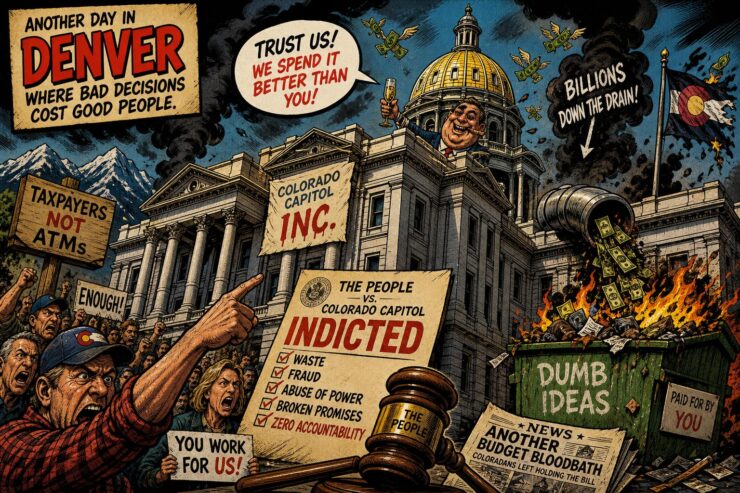
The Denver Post’s latest Capitol roundup reads like a hostage note from a government that has discovered democracy is adorable until voters try using it.
Colorado lawmakers are now drafting a bill to “add definitions” and “guardrails” to Initiative 177, a proposed ballot measure that would give Coloradans the constitutional right to buy natural gas for cooking or heating. The text of the bill was not even released yet, because apparently transparency is one of those fossil fuels they’re trying to phase out.
House Speaker Julie McCluskie warned that the two-sentence initiative is “poorly defined” and could have “dangerous and concerning outcomes.” Translation: voters might pass something the Capitol climate priesthood does not like, so the adults in the room need to wrap it in legal barbed wire before the peasants touch the thermostat.
This is the same legislature that can produce a 10-car pileup of bills on surveillance pricing, RTD restructuring, private investment schemes, caucus donor secrecy, 3D-printed guns, ag overtime, AI rules, and federal lawsuits — all in the final sprint of session — but somehow a ballot initiative about buying gas is too reckless for public consumption.
The scam is not subtle. When lawmakers want more power, everything is an emergency. When voters want power, suddenly we need definitions, guardrails, task forces, legal memos, and a spiritual cleansing from the Joint Budget Committee.
And speaking of legal memos, Senate Bill 180 died after trying to let the state invest enterprise fees and other public money in privately managed investment funds to pay for low-income childcare programs. The Polis administration said it had a legal opinion from the attorney general’s office saying the arrangement was fine, but refused to release it to legislators.
A “super-secret memo” backing the use of public money in private investment funds. Beautiful. That is not governance. That is a guy at a poker table saying, “Trust me, I have a note from my lawyer,” while refusing to show anyone the note, the lawyer, or the cards.
Then lawmakers killed a caucus transparency bill while more than a dozen Democratic lawmakers are under ethics investigations connected to a private donor retreat. Sen. William Lindstedt, one of the lawmakers tied to that mess, voted with two Republicans to kill the bill requiring caucuses to disclose donors, fundraising, and spending.
You almost have to admire the efficiency. Why fix the appearance of backroom money when you can simply turn off the lights and call it legislative process?
Meanwhile, RTD — the beloved transit dumpster fire of metro Denver — is headed for an overhaul that shrinks its board from 15 members to nine while increasing pay. Five members would be elected. Four would be appointed by the governor. Because when public trust is low, nothing says “ride the bus, citizen” like fewer elected officials and more gubernatorial fingerprints.
This is Colorado politics in miniature: voters are dangerous, donors are private, memos are secret, agencies are broken, and the answer is always more control by the same people wearing the arsonist helmet at the fire scene.
Normal Coloradans are paying more for housing, energy, transportation, groceries, and the privilege of being lectured by lawmakers who think your gas stove needs “guardrails” but their donor caucuses do not need sunlight.
The Capitol’s message is clear: transparency for you, secrecy for them, and if you don’t like it, they’ll draft a bill to define your objection as dangerous.
Source: The Denver Post

 Just Stop It