
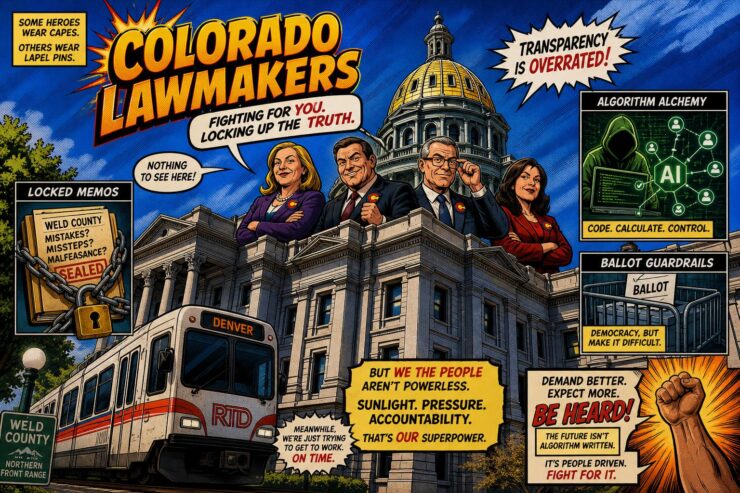
Colorado lawmakers confirmed this week that secret algorithms are dangerous unless they are replaced by secret memos, undisclosed donor retreats, appointed transit overseers, and ballot-measure “guardrails” written by the same people currently sprinting through the Capitol with a calendar and a lighter.
The clarification came during the final stretch of the legislative session, according to The Denver Post, as lawmakers advanced a ban on “surveillance pricing” while simultaneously relying on unreleased legal analysis, killing caucus donor transparency, preparing to blunt a natural gas ballot initiative, and moving to shrink RTD’s elected board while paying the remaining adults more to supervise the train that may or may not arrive.
“We believe Coloradans deserve protection from powerful institutions using hidden data to manipulate outcomes,” said one Capitol official, standing in front of a locked drawer containing the memo explaining why public money can be steered into privately managed investment funds. “That’s why we are doing it manually.”
House Bill 1210 would ban companies from using consumer data to set individualized prices for groceries, flights, electronics, and app-based wages, a practice lawmakers described as an unacceptable invasion by corporations that have failed to first run for office.
Gov. Jared Polis, meanwhile, has reportedly shown little warmth toward the bill, maintaining his long-standing position that Colorado should regulate technology carefully, unless the technology is making somebody rich in a way that sounds innovative at a donor dinner in Boulder.
At the same time, the governor’s office backed a bill allowing state agencies to invest enterprise fees and other public money in private funds, citing a legal opinion from the attorney general’s office that legislators were not allowed to see because democracy works best when the answer key is kept by a guy named Chad from legal.
“The Constitution is very clear,” said a consultant close to the matter. “It says the state generally cannot own stock in corporations, unless a private memo says everyone should shut up and admire the yield.”
That bill died in committee, dealing a temporary setback to Colorado’s emerging doctrine that public money becomes smarter once it is placed farther away from the public.
Lawmakers also killed a caucus transparency bill that would have required legislative caucuses to disclose donors, a proposal considered especially rude because more than a dozen Democratic lawmakers are already facing ethics investigations related to a private retreat and an undisclosed amount of money.
“Transparency is important,” said a lawmaker familiar with the vote. “But not so important that it starts identifying people.”
Elsewhere, lawmakers prepared legislation to add “definitions” and “guardrails” to a proposed ballot initiative giving Coloradans the constitutional right to buy and sell natural gas for cooking and heating. Officials warned the measure was dangerously vague, unlike the legislative process, where bills are drafted privately at the end of session and introduced at the speed of a stolen catalytic converter.
RTD also moved closer to reform, with a bill shrinking its 15-member elected board to nine members, four of whom would be appointed by the governor. The remaining board members would be paid more, ensuring the region’s transit system can continue not functioning under cleaner organizational charts.
Officials said the overhaul would improve accountability by reducing the number of people voters can blame.
By week’s end, the Capitol had settled on a consistent message: Colorado residents must be protected from opaque systems making decisions about their lives.
Unless the opaque system has a badge, a bill number, and lunch with the governor’s office.
Source: The Denver Post

 Just Stop It