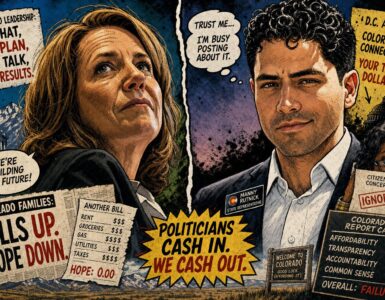


Denver Public Schools announced this week that the best time to ask voters for another tax increase is immediately after assuring them the last giant tax-adjacent school money package definitely would not do that.
The Denver Gazette reports DPS is preparing to seek a mill levy override just 18 months after voters approved a record $975 million bond that was sold with promises it would not raise taxes. Now the district wants another $43 million a year, which would push the Denver school tax rate from 29% to 30% and cost the average homeowner another $71 annually, even though officials have not identified a specific need for the money and instead say they’ll gather community input on how to spend it.
In fairness, this is modern Denver governance at its most evolved: ask for the cash first, form a committee later, and let the consultants discover the purpose somewhere between the kickoff meeting and the Canva deck.
DPS already gets more than 25% of its core funding through voter-approved tax overrides, because once a public institution learns voters can be guilted, flattered, and panicked into recurring withdrawals, you’d be stupid not to turn that into a business model. The district says the override is needed as enrollment drops, state funding tied to enrollment weakens, and long-running financial pressure keeps squeezing the budget.
A recent Gazette analysis found DPS has operated with a negative unrestricted net position for at least two decades, which is accounting language for “this thing has been financially fucked for a while, but everyone kept smiling through presentations anyway.”
Then there is the bond story, which only gets filthier the more you read. The 2024 package was the biggest in Denver history and included money for safety, technology, air conditioning, and critical maintenance. But planning documents reviewed by the Gazette found schools that stayed open received about 57% more bond funding on average than campuses later slated for closure or restructuring. So some schools got a nice fat capital promise while others got the public-school version of a condolence basket.
“It is true that we indicated and plan for all buildings to receive something from the bond package, but we never said the amounts would be equal,” a district spokesman said, accidentally delivering the entire Denver education philosophy in one sentence: yes, everyone matters, but some of you matter in a noticeably cheaper way.
The district has also relied on lease-purchase debt arrangements known as Certificates of Participation to take on long-term obligations without voter approval, because when transparency becomes inconvenient, Colorado institutions have always had the courage to locate a workaround with a very professional-sounding name. That practice is now the subject of an ongoing lawsuit, which is usually not what healthy financial systems inspire.
Meanwhile, homeowners are already paying more in school taxes next year because of rising assessed values, the full mill levy, and a ballooning abatement surcharge that shifts the cost of successful property-tax appeals onto everybody else. That means the public is already getting nicked for the district’s structural mess before the next ask has even hit the ballot.
A former DPS bond official said the district effectively needs voters to pass a bond every four years because it lacks a maintenance revenue stream. Which is a hell of an admission. Not that the district has a long-term plan and needs help executing it. More that the long-term plan is to keep asking.
Denver Public Schools now wants voters to believe that after decades of borrowing, repeated overrides, shrinking enrollment, uneven bond distribution, off-book style debt mechanisms, and a billion-dollar package approved less than two years ago, the real missing ingredient is one more tax hike with the details to be determined later.
The children, sources said, remain an excellent brand shield.
Source: The Denver Gazette

 Just Stop It